
At Hudson Investing, we spend a lot of time talking about how to invest in multifamily—but we don’t often walk investors through a real deal while it’s actively coming together.
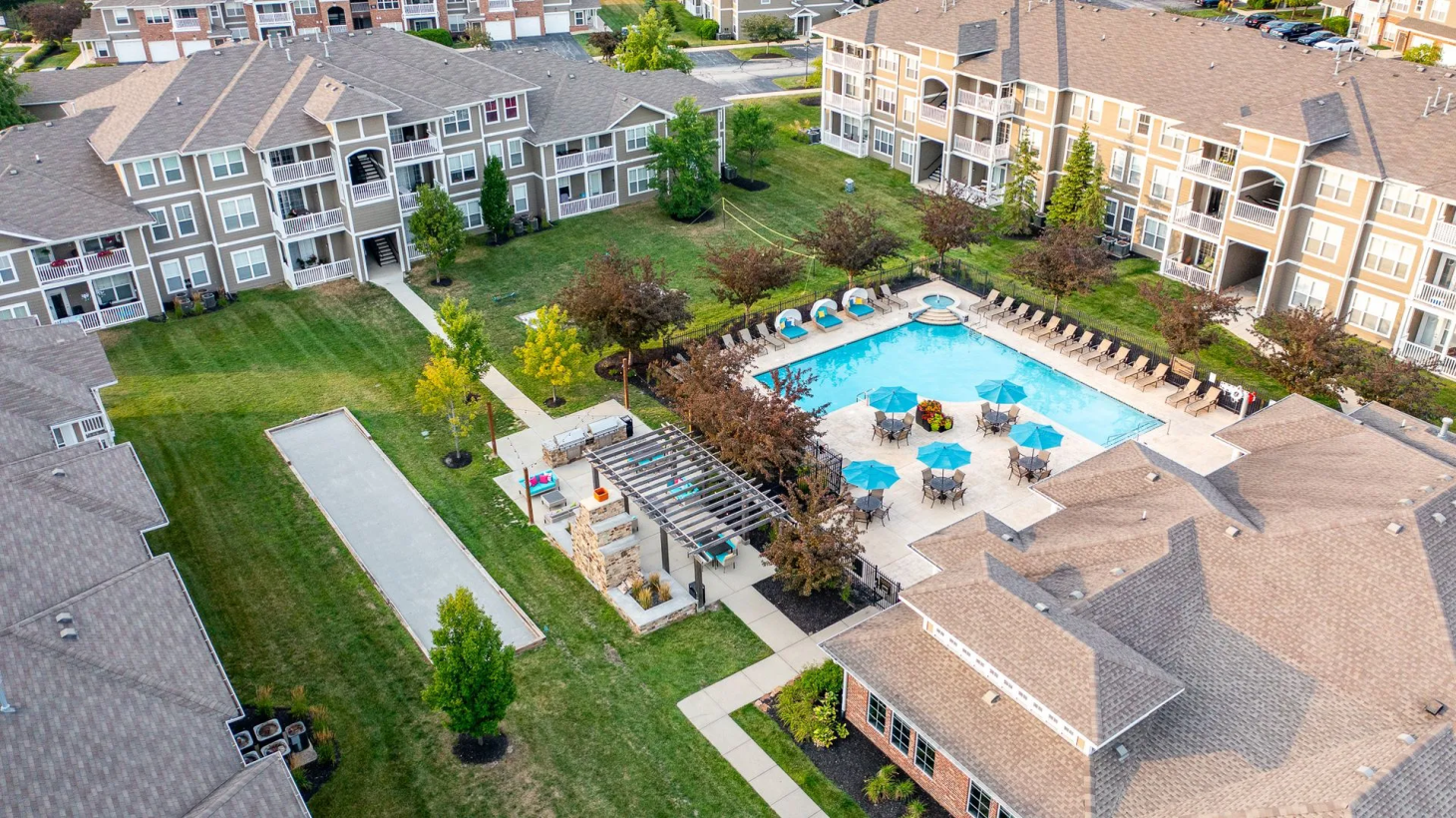
As co-founder and managing partner of Hudson Investing, I recently sat down with my business partner, Curtis Edwards—Managing Partner at Hudson—on an episode of Ritter on Real Estate to do exactly that. Together, we walked through a real-time example of our underwriting and decision-making process by breaking down a property we currently have under contract: Maple Knoll Apartments in Westfield, Indiana.
Our goal is to give you a tangible example of what a strong, risk-adjusted multifamily opportunity looks like in today’s market, how we evaluate it, and the types of questions sophisticated investors are asking during the capital raise.
The Deal at a Glance
– Property: Maple Knoll Apartments
– Location: Westfield, Indiana
– Units: 300
– Year Built: 2008
– Asset Class: B+ (institutional-quality)
– Status: Under contract
Maple Knoll is a large, institutional-class asset originally built for GE Capital and owned by several major investment groups over its lifetime. While it has naturally aged into a B+ property, our business plan is focused on elevating the asset back toward the top of its competitive set—without introducing unnecessary construction or execution risk.
What We’re Looking For in Early 2026
Markets change, and our investment strategy evolves with them.
As we move into early 2026, our focus is on maximizing risk-adjusted returns—limiting downside exposure while still creating meaningful upside for our investors. Maple Knoll is a strong example of the type of asset that fits that profile today.
Below are the core reasons this deal stands out.
1. Institutional-Class Asset With Operational Upside
Large institutions typically build and own assets like this—300+ unit, high-quality properties. However, institutional owners often manage from a distance, prioritizing scale over optimization.
That’s where we see opportunity.
Because we operate locally, manage in-house, and take an entrepreneurial approach to operations, we’re able to:
– Tighten expense controls
– Improve on-site execution
– Capture value that institutional owners often leave unrealized
2. Meaningful Rent Gap to New Construction
One of the most important components of our underwriting is understanding where existing rents sit relative to new supply.
At Maple Knoll:
– New Class A product in the area is leasing for $500–$700 more per unit
– Our business plan only requires $140–$250 rent increases
That means we’re not pushing rents to the ceiling. Instead, we maintain a meaningful affordability buffer while still improving cash flow. This gap provides a critical layer of downside protection in a supply-conscious market.
3. A High-Growth Market with Strong Tailwinds
We always evaluate the market before the property.
Westfield, Indiana checks every box:
– Approximately 34% population growth over the past five years
– One of the fastest-growing cities in the country
– Strong job growth, infrastructure investment, and retail development
Real estate performs best in expanding markets. Owning quality assets in areas with long-term growth tailwinds significantly reduces risk.
4. Scale Creates Stability
A 300-unit asset is inherently more resilient than a smaller property.
Scale provides:
– More stable cash flow
– Better expense efficiency
– Easier absorption of vacancies
– Professional, full-time on-site management
In uncertain market environments, scale matters—and Maple Knoll delivers it.
A Simple, Executable Business Plan
In today’s market, simplicity is a competitive advantage.
Construction costs remain elevated, and we’ve seen many operators overspend on renovations that don’t materially increase value. Maple Knoll is different:
– The property has been exceptionally well maintained
– Many partial renovations are already complete
– Our improvements are targeted and data-driven
We’re focused on addressing the actual leasing objections—not over-renovating units or taking unnecessary construction risk.
Investor Question #1: How Certain Are the Expense Savings?
One of the strongest questions we received during the capital raise centered on expense reductions.
Our underwriting shows an immediate ~$400,000 increase in NOI from expense savings. The key question was whether those savings were operational assumptions or contractually supported.
The majority are contractually locked in.
– Approximately $250,000 comes from insurance savings through our master portfolio policy
– The remaining ~$150,000 comes from existing vendor contracts across software, IT, landscaping, and other services
These savings are based on pricing we already use across our portfolio—not best-case assumptions.
This level of certainty allows us to acquire the property at a day-one cap rate above 5% in a market where comparable assets trade closer to the low-4% range.
Investor Question #2: How Does Maple Knoll Compete Long-Term With New Supply?
Supply risk is one of the most important considerations in multifamily today. We believe Maple Knoll is well positioned long-term for several reasons:
– Midwest markets historically experience steadier growth with fewer boom-and-bust cycles
– The property sits on 24 acres, which would be nearly impossible to replicate today due to land costs
– Mature landscaping, walkability, and extensive amenities create a superior resident experience
– Even during peak new supply delivery, Maple Knoll maintained 96% occupancy
– The property has a 4.6 Google rating and was recently named Indiana Property of the Year
New developments nearby are denser, more expensive, and built farther from the most desirable areas. We’re offering a renovated, high-quality product at a lower price point—creating a durable competitive advantage.
Investor Question #3: Why a Five-Year Hold?
We underwrite to a five-year hold to maintain consistency across our core-plus and value-add deals—but execution happens much faster.
– Renovations are completed within year one using our rapid-turn renovation process
– Rent increases are primarily captured through lease renewals in years one and two
– By the end of year two, the business plan is largely complete
Years three through five allow us to:
– Operate the property efficiently
– Monitor interest rate and capital market conditions
– Exit when institutional demand and pricing align with our return targets
We remain conservative in underwriting while retaining flexibility around timing.
Final Thoughts
Maple Knoll represents exactly what we’re focused on right now:
– A high-growth market
– Institutional-quality scale
– A meaningful rent gap to new construction
– Contractually supported NOI growth
– A simple, low-risk execution strategy
That’s why we pursued this opportunity and why we’re excited about it as our first acquisition of 2026. If you’d like to learn more, you can view the full presentation and investor materials at: https://hudsoninvesting.com/maple-knoll-apartments/